


TL;DR
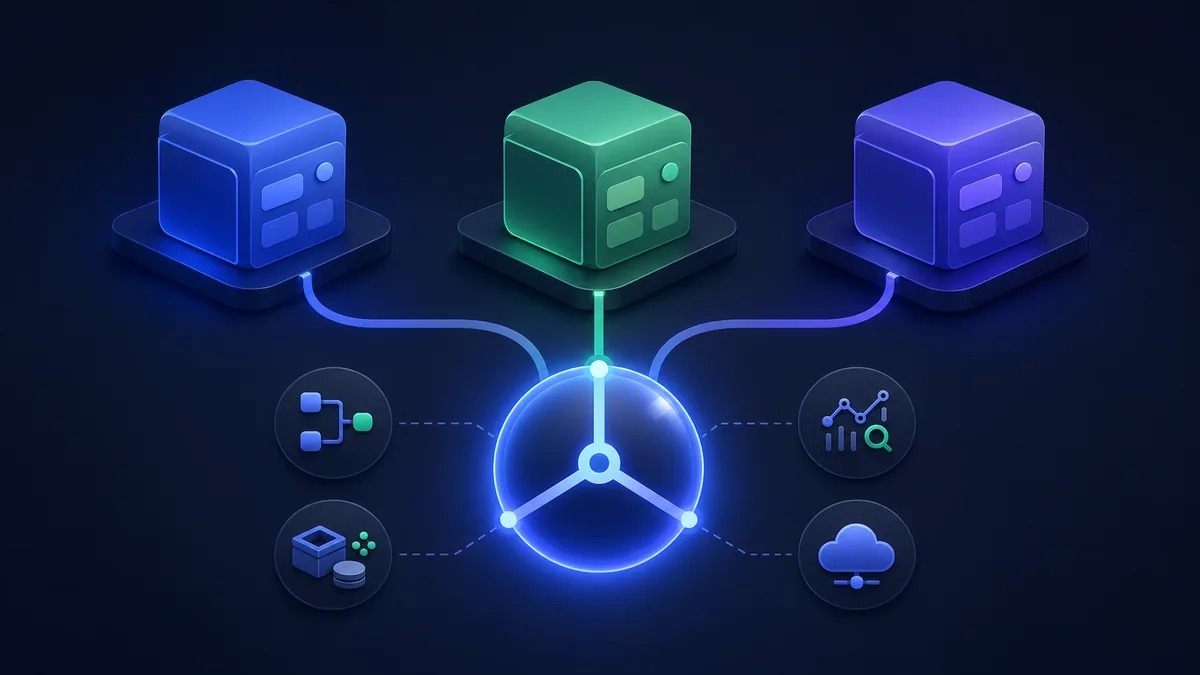
Mastra is the default for most TypeScript agent projects in 2026: workflow primitives, RAG, evals, and observability in one batteries-included framework. Voltagent leans visual-builder-friendly with strong observability and a more component-oriented API — pick it if your team wants to assemble agents from clearly-delineated parts. Inferable's bet is durable, distributed agent execution: it treats every tool call like a serverless function with retry, replay, and cross-machine handoff. All three are TypeScript-first, all three integrate cleanly with the major model providers, and all three have caught up with ai-package primitives. The right choice is determined by where you want the framework's opinions to land — modeling (Mastra), composition (Voltagent), or execution (Inferable).
Quick Verdict
| Mastra | Voltagent | Inferable | |
|---|---|---|---|
| Primary metaphor | Workflows + agents | Composable agents | Durable functions |
| Built-in RAG | Yes | Yes | Add-on |
| Built-in evals | Yes | Yes | No |
| Observability | OTel + Mastra Cloud | OTel + Voltagent Console | OTel + run UI |
| Tool model | Zod-validated functions | Zod-validated tools | Distributed tool registry |
| Self-host | Yes | Yes | Yes |
| Cloud option | Mastra Cloud | Voltagent Cloud | Inferable Cloud |
| Best for | "Give me one framework" | UI-driven team workflows | Long-running agent jobs |
Key Takeaways
- The base model is the same. All three give you typed tool definitions, model abstractions, structured output, and streaming. You'll write very similar code for the inner loop in any of them.
- The frameworks differ at the outside of the agent. Mastra wraps the agent in a workflow engine. Voltagent wraps it in a composition surface. Inferable wraps it in a durable-execution layer.
- Observability matters as much as the SDK. All three ship dashboards; Voltagent's console and Mastra's evals UI are the most polished as of 2026.
- Picking is reversible. The agent inner loop is portable. Migrating between these is mostly rewriting the outer shell (workflow definition or durable wrapper), not the prompts and tools themselves.
What Each Framework Actually Is
Mastra
A TypeScript framework that bundles agents, workflows, RAG, evals, and memory under one config. Workflows are first-class — you compose agent.generate(...) steps with branches, parallels, and human-in-the-loop pauses.
import { Mastra } from "@mastra/core";
import { Agent } from "@mastra/core/agent";

const supportAgent = new Agent({
  name: "support",
  model: { provider: "anthropic", name: "claude-opus-4-7" },
  instructions: "You are a customer support agent.",
  tools: { lookupOrder, createTicket },
});

const mastra = new Mastra({ agents: { supportAgent } });

const result = await mastra.getAgent("supportAgent").generate({
  messages: [{ role: "user", content: "Where's my order?" }],
});
The Mastra workflow primitive is what separates it from "just use the ai package directly" — branching, retries, and state persistence all live in the framework, not in your code.
Voltagent
Voltagent's design centers on the agent as a composable unit with subagents, tools, retrievers, and hooks. The Voltagent Console is the differentiator: a visual run inspector that's particularly useful when explaining agent behavior to non-engineers.
import { Agent, VoltAgent } from "@voltagent/core";
import { VercelAIProvider } from "@voltagent/vercel-ai";
import { anthropic } from "@ai-sdk/anthropic";

const agent = new Agent({
  name: "research-agent",
  llm: new VercelAIProvider(),
  model: anthropic("claude-opus-4-7"),
  tools: [searchWeb, summarize],
});

const volt = new VoltAgent({ agents: { agent } });
const result = await agent.generateText("Summarize the latest on TanStack DB.");
Voltagent leans on the Vercel AI SDK as a transport layer underneath, so anything you can do with the AI SDK, you can do here — Voltagent adds composition, observability, and a hosted console on top.
Inferable
Inferable treats agent execution as a distributed system problem. Tools live in worker processes (often on different machines or in different services). The control plane orchestrates calls, handles retries, persists state, and exposes a run timeline. The closest analogy is "Temporal for agents".
import { Inferable } from "inferable";

const i = new Inferable({ apiSecret: process.env.INFERABLE_API_KEY! });

i.tools.register({
  name: "lookupOrder",
  schema: { input: z.object({ orderId: z.string() }) },
  func: async ({ orderId }) => db.orders.findUnique({ where: { id: orderId } }),
});

const run = await i.run({
  initialPrompt: "Help the customer with their order #1234",
  resultSchema: z.object({ resolution: z.string() }),
});
The win is operational: a tool call that takes 30 seconds, fails halfway, and needs replay is a first-class concern. The cost is the control-plane dependency.
Decision Map
| If you... | Pick |
|---|---|
| Want one framework that does everything (RAG, evals, workflows) | Mastra |
| Need a visual run inspector for stakeholders | Voltagent |
| Are building agents that run for minutes-to-hours and need durability | Inferable |
| Already use the Vercel AI SDK and want minimal additions | Voltagent (or stay on bare AI SDK) |
| Need tools to run on separate machines / services | Inferable |
| Want the broadest ecosystem (community examples, integrations) | Mastra |
How They Compare to "Just Use the AI SDK"
A fair question: why not stay on the Vercel AI SDK directly?
- You don't need a workflow: stay on bare AI SDK + your own glue code.
- You need branching, retries, evals: Mastra or Voltagent justify themselves.
- You need durability across crashes: Inferable (or Hatchet/Trigger.dev as a workflow engine that you wrap your AI SDK code in).
The framework tax is real. Adopt one when you actually need its outer-shell features, not because "everyone uses a framework now". The gravitational pull comes from observability and evals more than from the agent loop itself.
RAG Stories at a Glance
| Mastra | Voltagent | Inferable | |
|---|---|---|---|
| Built-in retrievers | pgvector, Pinecone, Qdrant | pgvector, Pinecone, Chroma | Bring your own |
| Embeddings | OpenAI, Cohere, Voyage, ... | Same | Bring your own |
| Re-ranking | Built-in | Built-in | Build-yourself |
| Document processing | Built-in chunking | Built-in chunking | Build-yourself |
For a deeper view of the underlying vector-DB choices, see pgvector vs Qdrant vs Weaviate.
Who Should Pick What
- Solo dev or small team building an agent product: Mastra. The lowest "I have to make 50 architectural decisions before I ship" tax.
- Team that needs non-engineers (PM, support, ops) to inspect agent runs: Voltagent. The console is the right surface for that audience.
- Backend team building durable, long-running automation agents: Inferable. Treat the framework as critical infrastructure, not a prompt library.
- Already heavy on Vercel AI SDK and just want patterns, not a framework: stay there. Add Mastra later if workflows show up.
Verdict
Mastra is the safe 2026 default for new TypeScript agent work — broadest scope, mature docs, decent community traction. Voltagent is a strong second when run-inspection and stakeholder visibility matter. Inferable is in a category of its own: pick it when "what happens when the agent crashes mid-run" is a question your product can't hand-wave. None of these locks you in irreversibly — the agent inner loop ports cleanly between all three.